





Guard your money. Shield your identity.
Learn how to stay safe and what to do if something goes wrong
Need quick help?Need quick help?
I don’t recognise a transaction
I think I’ve just been scammed
I’ve had my phone stolen
My account seems to be restricted
Beware: Criminals are masters of impersonation

People often think only careless people get scammed, and that it will not happen to them. This is an incorrect and dangerous assumption. Fraudsters and scammers can convince even careful and cautious people that they’re talking to a police officer, bank manager, fraud investigator, or even a member of their family. Don’t underestimate them.

They often gather personal information about you, acquired illegally or via simple online research, and use it to make their request convincing. So even if a person appears trustworthy, it is always safer not to share personal information on the phone, or via email or messaging apps (e.g. WhatsApp, Facebook, Telegram, etc.).
If it feels wrong, stop what you’re doing

🚩 Was this unexpected?
Did this call or message come out of the blue, or via an unofficial channel? If a real business or government organisation is trying to contact you, it usually doesn’t come as a surprise.

🚩It feels too good to be true?
No one offers you something for nothing. If someone is promising you higher than expected returns, an easy path to wealth, or other too-good-to-be-true benefits, proceed only with extreme caution.

🚩 Are they rushing you?
A legitimate business will never rush you into taking action. Scammers absolutely will. They want you to panic and take action without thinking. So if you’re being rushed, stop the conversation.

🚩 Are they reassuring you?
The more smooth talking and reassuring the person, the louder the alarm bells should be in your head. If they continue to try to persuade you after you’ve voiced concerns, stop the conversation.
Report Fraud
📱 +370 691 106 93
✉️ [email protected]
If you’ve been scammed or feel something is wrong, contact our team immediately. Customer support available: Monday–Friday, 09:00–18:00 (Vilnius time, Lithuania).
Verification of Payee (VoP)
What is Verification of Payee service?
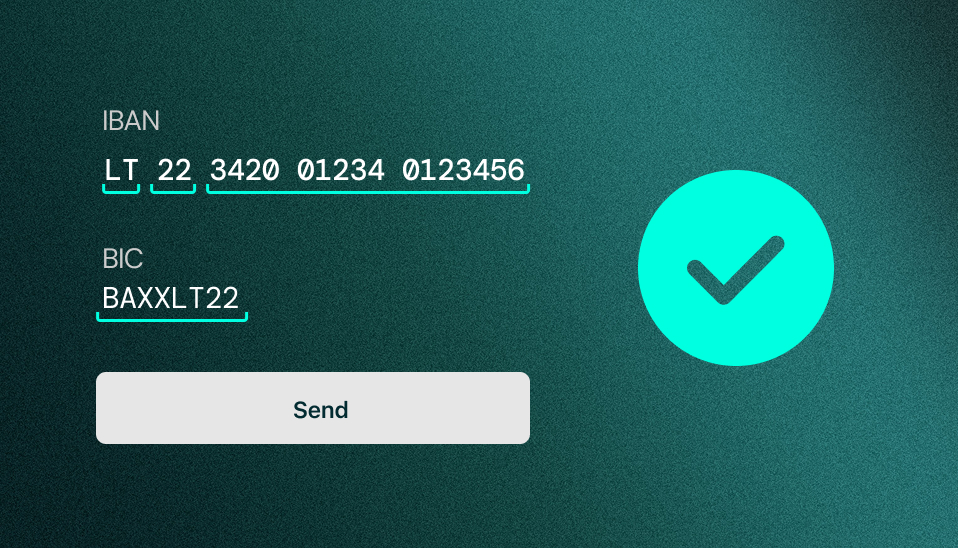
The Verification of Payee service is designed to check beneficiary banking details such as name and IBAN (International Bank Account Number) prior to approving and executing a payment.
Protecting you from sending money to the wrong account.
Fraudsters may try to trick you into sending money to the wrong account. To prevent this, FINCI uses When you enter a payee’s name and IBAN, we check if they match the bank’s records — and show the result before the payment is made.
What you might see when making a paymentWhat you might see when making a payment
✅ Match
⚠️ Close match
❌ No match
ℹ️ Verification not possible
Tips for safe payments
Why this matters?
• If you ignore a “No match” or “Close match” warning and send money anyway, you may not be able to get it back if it goes to the wrong person. Recovery of funds in such cases depends on the cooperation of the receiving bank and whether the funds are still available.
• Fraudsters often rely on people not noticing small differences in names. Always check carefully.
• Even if you get a “Match”, the payment may still be rejected by the payee’s bank for other reasons (like closed accounts or restrictions). Regulators (EBA, European Commission) explicitly state that VoP is a preventive tool, not a guarantee of reimbursement.Tips for safe payments
• Enter the name exactly as it’s registered with the bank: Private persons – full first name + last name Businesses – full legal company name
• If you’re a business, make sure invoices and systems use the same name that’s on your account.
• If someone suddenly changes their bank details, always confirm through a trusted contact (not just by email).
• When in doubt: stop, check, and contact FINCI support.
Be extra vigilant with unsolicited phone calls, text messages, and emails. This is when you’re most vulnerable
Calls and SMS
Fraudsters can spoof caller IDs, making them appear legitimate. If someone calls unexpectedly asking for personal information or urgent payments, hang up and verify their identity before responding. Common scams include impersonating bank employees or police, claiming your account is compromised. Never share SMS verification codes, even if requested by someone you know. Advise them to use their own number instead.
Common scenario:
Fraudster: “Hello Mrs Smith, I’m Alexander calling from your bank. It has come to our attention that someone is trying to send €1,000 from your account to a new unknown payee. We believe this is a criminal trying to steal your money. To block this payment and secure your account I need you to verify your login details with me now.”
Common scenario:
Fraudster: “Dear Nathalie – I’m excited to offer you an exclusive opportunity to invest in a growing tech startup portfolio that has generated 21% annual returns for our top-tier clients. Due to high demand, we can only accept a few more investors. To secure your place please transfer the initial investment of $800 by Friday, 5 PM. Looking forward to helping you grow your portfolio!”
Messaging apps
Fraudsters can easily change their name and photo on messaging apps, making it simple to impersonate a legitimate company or representative. They often send malicious links designed to steal your personal information or take over your messaging app account. Always verify the sender's identity and avoid clicking on unsolicited links.
Common scenario:
Fraudster: "Hi Greta, it's Mama. I used your phone number by mistake when setting up a new account. They should have sent a verification code to your phone. Can you send it to me now? Thank you my love.”
Fake websites
Avoid using search engines to find FINCI’s website. Manually type the address or save it in your bookmarks. Fraudsters create convincing fake websites to steal login details, often promoted through ads or appearing high in search results. These sites mimic legitimate businesses, offering nonexistent products or unrealistic investment returns to lure victims.
Know the scams to avoid the scams
Fake parcel scams
Scammers send fake delivery notifications, urging you to click a link to reschedule a parcel. This is a phishing tactic to steal your personal data or install malware. Avoid clicking suspicious links, and always check deliveries on a company's official website.
Advance payment scams
Scammers trick victims into making upfront payments for goods, services, or financial gains that never materialise. They use enticing offers like cheap electronics, luxury items, loans, or investments to lure victims. Once payment is made, nothing is delivered, and the promises turn out to be fake.
Marketplace scams
Fraudsters on online marketplaces and fake websites lure victims with low prices, demanding pre-payment but never delivering the goods. Research vendors carefully, use reputable sellers, and for secondhand purchases, choose those with good reviews or who accept payment upon delivery.
Investment scams
Be cautious of investment opportunities that seem too good to be true. Fraudsters often use fake social media posts to trick you, and even use websites that show your “investment” growing. But when you try to withdraw cash, there is none. Always stick to licensed platforms.
Fake job scams
Remote job scams frequently involve fake job offers designed to steal money. Scammers may request upfront payments or assign tasks that lead to eventual payments. These criminals often use messaging apps and pose as legitimate companies or recruiters to target victims.
Phishing scams
Scammers impersonate organisations like government agencies or police to gain trust. They trick victims into making payments or revealing sensitive information, using that to access accounts or create fake ones. Always verify the identity of anyone requesting payments or information.
Payment diversion fraud
Fraudsters send official-looking emails or letters with fake invoices for services you already use. They trick you into clicking a link which makes a payment to their account, not the company you think you’re paying. So always be wary of changes in payment details.
Fake CEO fraud
Scammers pose as high-ranking company officials and instruct employees to make urgent payments to fraudulent accounts. Always follow company procedures for payments, even if the request appears to come from the CEO or other high-level executive.
Property scams
Be wary of upfront fees to reserve a property or book a viewing, and when paying rent. Fraudsters often use stolen photos and ask for payments outside official platforms. Use reverse-image searches to check photos haven’t been taken from legitimate sources. Always verify information before making payments.
Keep yourself safe: What to do and what not to do

• Don’t be rushed into a decision or payment by anyone
• Don’t click links in unsolicited emails or messages
• Don’t share personal or financial information with unverified sources
• Don’t make upfront payments to unknown individuals or businesses
• Don’t assume you will always be the one to spot a scam
• Do be extremely cautious when giving anyone your personal information
• Do trust your instincts, if it feels wrong or too good to be true it probably is
• Do report suspicious activity to your financial institution or relevant authorities
• Do follow your company procedures even if the request comes from a senior figure
• Do verify the identity of anyone who unexpectedly requests money or information
How do I report fraud, and other important questionsHow do I report fraud,
and other important questions
How do I report fraud?
How do I report an attempted fraud or scam?
How do I recognise a scam?
What should I do if I’ve shared my personal or financial information with a scammer?
What steps can I take to avoid scams in the future?
Can FINCI guarantee my money back if I’ve been scammed?
What should I do if someone claims to be from FINCI?
How do I spot a fake website?
Q/A related to VoP:
What happens if I see “Verification not possible”?
For which payment types will this service be provided?
How much will this service cost?
Does VoP guarantee my payment is safe?
Get more useful business services
Co-branded debit cards.
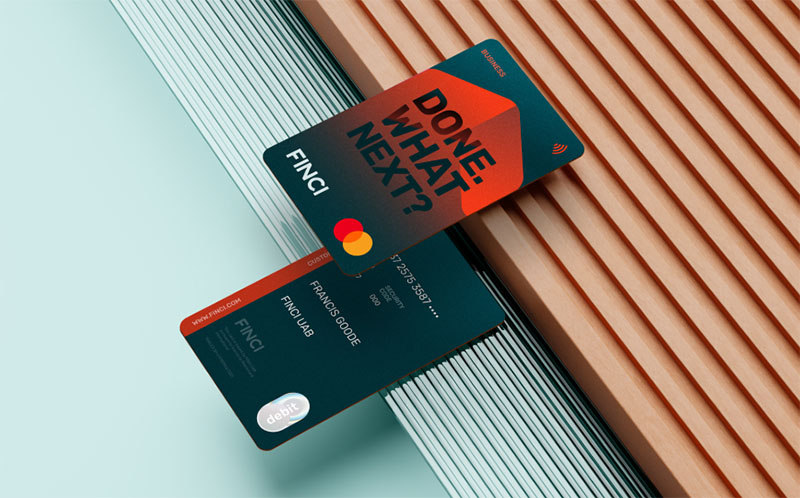
Specialising in crypto and lending companies, we make it easy for you to offer co-branded debit cards to your customers. We handle the technical, legal and operational details, so your customers can easily spend their crypto funds or loans on everyday purchases.
Learn more
Connect to Google Pay.
Leave your wallet at home and pay with Google Pay. It’s the fast, easy and secure way to pay in-apps, on websites, and wherever they accept contactless payments. Just grab your phone and go. Add your digital debit card and start using it immediately.
Learn more
Connect to Apple Pay.
Whatever you need to pay for – whether that’s your taxi, your coffee, or your food delivery – you can do so in seconds without thinking. Apple Pay is the fast, easy and secure way to pay for goods and services online and in real life.
Learn more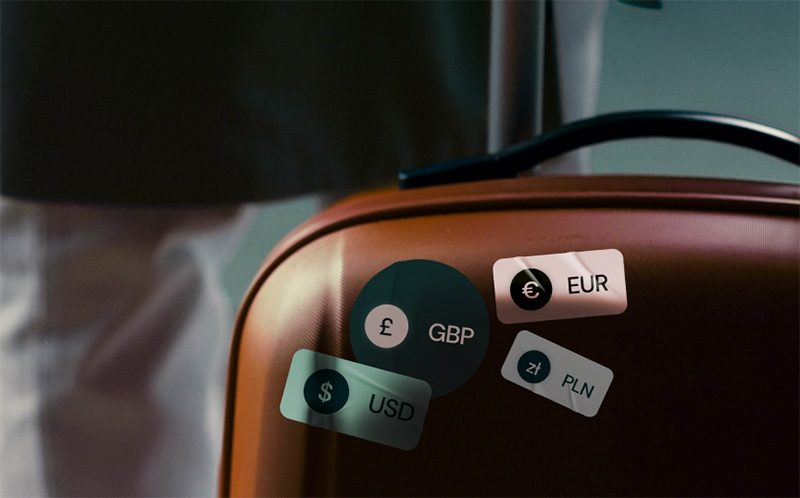
Multi-currency business account.
Easily trade with the world with a multi-currency business account. Transact in GBP, PLN, USD and EUR from one dashboard to avoid painful conversion fees, improve cash flow and make global trade more efficient.
Learn more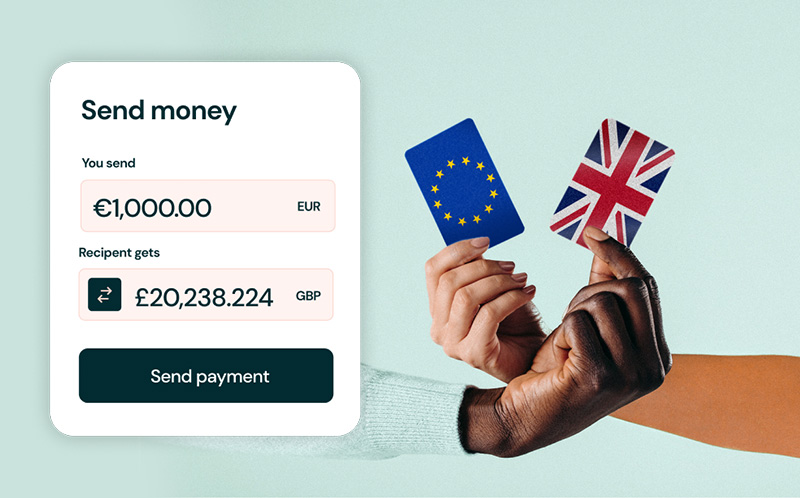
Instant global payouts.
Waiting days to send money across borders is a competitive disadvantage. With FINCI, you can send money instantly from Euro to multiple currencies, making it easier than ever to pay your suppliers, employees, and partners around the world.
Learn more
Open a
 account
by scanning the QR code and downloading the mobile app



Get your tailored business account
Please fill out this short form and your account manager will start preparing a business account tailored to your needs.
Business account opening in 3 simple steps.
STEP 1
Create a free personal account via the app.
STEP 2
Log in to the online bank via desktop
STEP 3
Proceed with business account opening
Scan QR code
to start
Business account opening in 3 simple steps.
STEP 1
Create a free personal account via the app.
STEP 2
Log in to the online bank via desktop
STEP 3
Proceed with business account opening
Scan QR code
to start